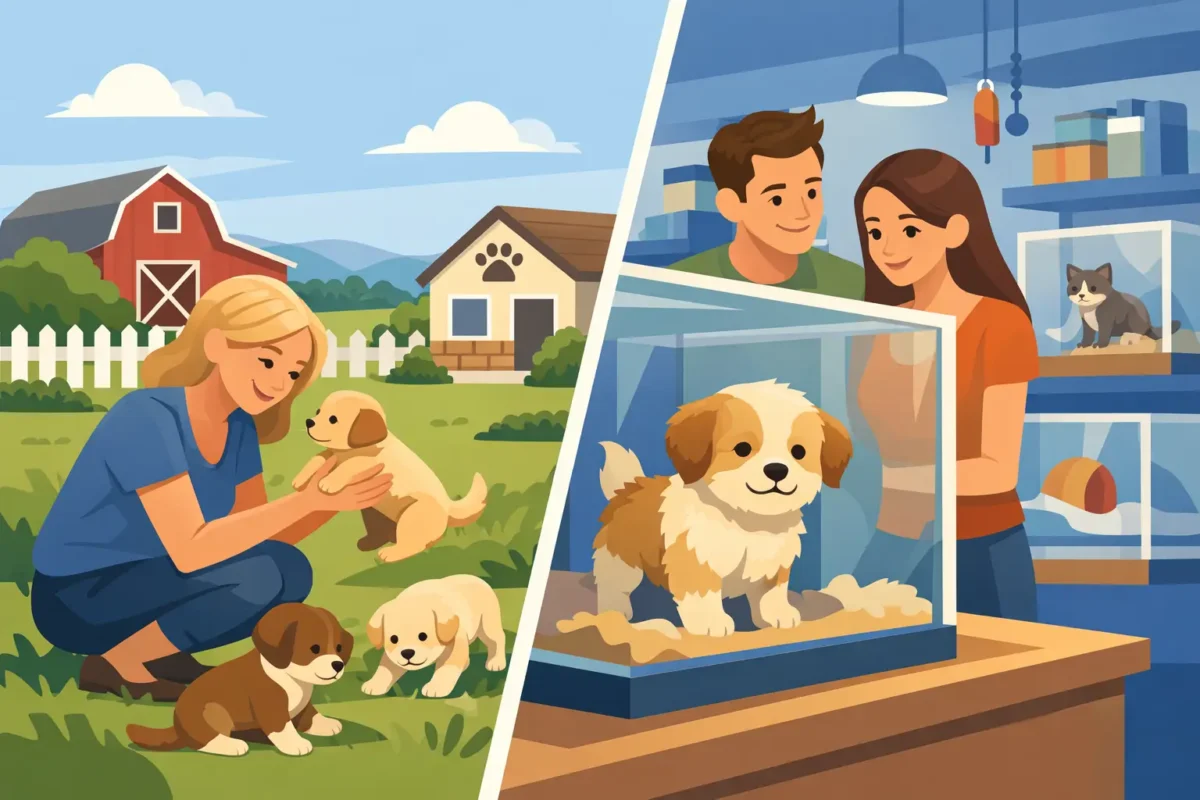
The decision between a breeder vs pet store puppy can shape far more than the day you bring your new companion home. It affects what you know about your puppy’s parents, early environment, health history, temperament, and the support available when you have questions after the first exciting week.
For families looking for a Labrador Retriever, this is not simply a question of where a puppy is available first. Labradors are loyal, intelligent, energetic dogs who often become central members of the family. Choosing a puppy with care gives you a stronger foundation for years of companionship, training, outdoor adventures, and everyday life together.
Breeder vs Pet Store Puppy: The Biggest Differences
A pet store may offer convenience. You may be able to see a puppy during a shopping trip, make a quick decision, and take the puppy home soon afterward. But convenience should never replace questions about where that puppy began life.
A responsible breeder is usually able to provide direct information about the puppy’s parents, pedigree, veterinary care, genetic screening, and early socialization. You should know who bred the litter, where the puppies were raised, and what steps were taken to produce dogs with sound temperament and health.
That transparency matters. A puppy is not a product on a shelf. A puppy is a lifelong commitment that will depend on you for care, structure, and affection. The more you know before bringing one home, the more confidently you can prepare for the responsibility ahead.
Not every pet store operates the same way, and some may work with local breeders or rescue organizations. Still, a buyer should be cautious when the store cannot clearly document the puppy’s origin, provide meaningful records on the parents, or answer detailed questions about how the litter was raised.
Why Parent Information Matters for Labrador Puppies
Labradors are loved for their friendly nature, willingness to please, and versatility. They can be gentle family companions, enthusiastic hunting partners, reliable obedience dogs, and capable competitors in rally, agility, and hunt tests. Those qualities do not happen by accident.
A carefully planned breeding program considers more than a puppy’s appearance. It considers the strengths and health background of both parents, including temperament, trainability, structure, and pedigree. When a breeder knows the dogs behind a litter, buyers have a clearer picture of the traits that may be passed along.
AKC registration can also be meaningful for buyers who want documented lineage. It helps establish that the puppy comes from registered parents and gives owners a formal record of pedigree. However, registration alone is not a complete health guarantee. Responsible buyers should also ask about health certifications, genetic screening, veterinary records, and the breeder’s approach to matching puppies with families.
A thoughtful breeder will welcome those questions. In fact, a breeder who truly cares about each puppy’s future should want to learn about your household, lifestyle, experience with dogs, and goals for your Labrador.
Early Raising Makes a Lasting Difference
The first weeks of a puppy’s life are full of important learning experiences. Puppies begin to respond to sounds, handling, people, surfaces, routines, and the gentle structure of daily care. A family-raised puppy that receives appropriate early socialization may arrive better prepared for the transition into a new home.
Ask where the puppies spend their time. Are they raised around normal household activity? Are they handled regularly? Have they been introduced to age-appropriate sights and sounds? Does the breeder begin basic routines that help puppies adjust to family life?
For a Labrador puppy, early care should support the cheerful, confident nature the breed is known for. That does not mean a puppy will arrive fully trained. Every puppy needs patience, house-training, boundaries, exercise, and positive guidance. But a strong beginning can make that learning process more enjoyable for both the puppy and the family.
Health Records Should Be Clear, Not Vague
When comparing a breeder vs pet store puppy, health documentation is one of the most practical areas to examine. You should not have to rely on broad assurances or verbal promises alone. Ask to review written information and understand what it means.
A reputable breeder should be prepared to discuss the puppy’s veterinary care, vaccinations appropriate for the puppy’s age, deworming schedule, and any available health information on the parents. For Labrador Retrievers, it is also wise to ask about genetic testing and health clearances relevant to the breed.
Written sales documentation matters because it puts expectations in one place. A clear contract or health guarantee can explain the breeder’s commitments, the buyer’s responsibilities, registration details, and what support is available after placement. Read every document before making a deposit or arranging travel or shipping.
Be especially careful if you feel rushed to pay, discouraged from asking questions, or asked to send money without seeing clear records. Trustworthy breeders earn confidence through openness, consistency, and a willingness to communicate.
Questions Worth Asking Before You Choose
Whether you are speaking with a breeder, visiting a store, or considering a puppy located in another state, a few direct questions can reveal a great deal. Ask who bred the puppy and where the litter was raised. Ask to learn about the parents, including temperament, health testing, and registration. Ask what veterinary care the puppy has received and what paperwork comes home with you.
You should also ask how the breeder handles placement. A good match is about more than choosing the cutest puppy in a photo. An active family may want a confident pup ready for hiking, retrieving, and training. A first-time dog owner may benefit from guidance on routine, crate training, feeding, and early obedience. Families with children should be honest about their household pace and expectations.
If distance is involved, ask exactly how transportation is handled. Safe puppy shipping or delivery arrangements should be planned carefully, with clear communication about timing, paperwork, travel requirements, and how the puppy’s comfort is protected throughout the process.
The Value of Ongoing Breeder Support
The day you bring your puppy home is the beginning of a relationship, not the end of a transaction. New owners often have questions about feeding, sleeping, crate training, biting, vaccines, socialization, and the normal adjustments of puppyhood.
A committed breeder remains a valuable resource because they know the breed and the individual lines behind their puppies. They can offer practical reassurance when your puppy is settling in and help you understand what is typical for a young Labrador.
At Laura Martin’s Labrador, puppies are raised with the goal of placing healthy, well-socialized Labrador Retrievers into loving homes. Families receive the confidence of AKC-registered lineage, health-focused breeding practices, written documentation, and breeder support designed to continue beyond pickup day.
Choosing What Fits Your Family
A pet store puppy may seem like the fastest path to bringing home a dog, but a carefully selected breeder offers something many families value more: a fuller story. You can understand the puppy’s background, meet or learn about the parents, review records, and start with a breeder who has a personal investment in the puppy’s future.
There are trade-offs. Working with a breeder may mean waiting for an upcoming litter, completing an application, placing a deposit, or arranging transportation. Yet waiting for the right Labrador is often easier than trying to solve avoidable surprises later. A quality breeder’s process is designed to protect the puppy, the breed, and the family receiving that puppy.
Choose the source that invites your questions, shares documentation clearly, and treats your future dog as an individual deserving of a safe, loving start. The right Labrador puppy will bring plenty of joyful noise, muddy paws, and enthusiastic greetings, but it should also come with the confidence that their first home prepared them well for yours.
