
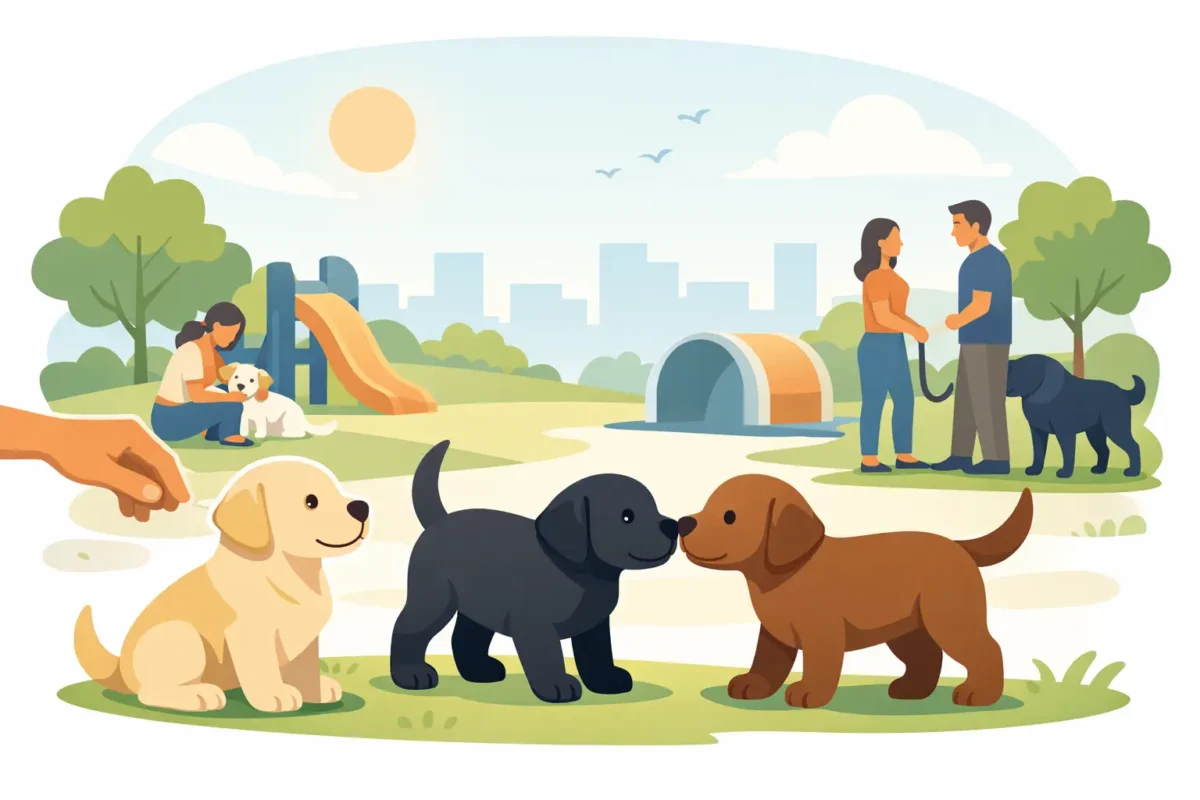
A Labrador puppy’s first weeks are not simply a waiting period before going home. They are a brief, meaningful window when gentle experiences can shape how that puppy responds to people, household sounds, handling, new places, and training for years to come. Early socialization for Lab puppies is one of the most valuable parts of responsible, family-based raising because it helps a naturally friendly breed grow into a confident and adaptable companion.
A well-socialized puppy is not expected to greet every person or situation with instant excitement. The real goal is more practical: a puppy that can recover calmly, look to its people for guidance, and approach everyday life with curiosity instead of fear. For families bringing home an AKC-registered Labrador Retriever, that foundation can make the adjustment from breeder to home feel far more manageable.
What Early Socialization Means for Lab Puppies
Socialization is often misunderstood as taking a puppy everywhere or introducing them to as many people as possible. Quantity alone is not the answer. Good socialization is a series of safe, positive, age-appropriate experiences where the puppy can explore without being overwhelmed.
For Labrador puppies, this may include calm time with different family members, gentle handling of paws and ears, normal home sounds, safe surfaces underfoot, short rides, and supervised interaction with stable adult dogs. It also includes learning small but valuable life skills: settling after play, waiting briefly, accepting a collar, and being comfortable when picked up or examined.
Labradors are known for their outgoing nature, intelligence, and willingness to work with people. Those qualities give them wonderful potential as family companions, hunting partners, obedience dogs, rally competitors, agility prospects, and show dogs. Still, temperament is influenced by both genetics and experience. Champion bloodlines and health-conscious breeding provide an important starting point, while thoughtful early care helps a puppy use those natural strengths well.
Why the First Weeks Matter So Much
Young puppies learn rapidly from the world around them. Their early experiences can influence how they handle novelty later, whether that novelty is a vacuum cleaner, a child dropping a toy, a grooming appointment, a car ride, or a visit from friends.
A puppy raised only in a quiet, limited environment may still become a wonderful dog, but the transition into a busy family home can require more patience. On the other hand, a puppy exposed to everyday life with care has already learned that ordinary changes do not have to be alarming.
This does not mean a responsible breeder pushes young puppies into stressful situations. Puppies need plenty of sleep, familiar routines, clean surroundings, and time with their mother and littermates. Littermate play teaches important canine communication, including how to respond when another puppy says, “That was too much.” The best programs balance gentle enrichment with rest and security.
Calm exposure is better than forced interaction
A confident puppy is not created by being passed from person to person at a crowded gathering. Forced interaction can teach a puppy that unfamiliar people are unpredictable or that there is no way to step back when uncertain.
Instead, puppies benefit from quiet, controlled introductions. A visitor can sit calmly and allow a puppy to approach. A new sound can be played softly while the puppy is relaxed. A new surface can be offered with room to investigate at the puppy’s own pace. Positive experiences should feel ordinary, not dramatic.
That distinction matters especially for families with young children. Children and puppies can form beautiful bonds, but adults should guide every interaction. Gentle touch, short play sessions, and quiet breaks protect both the child and the puppy while building trust.
What Responsible Breeder Socialization Can Include
Before a Labrador puppy joins a new family, a caring breeder can begin introducing the routines that make future training easier. At Laura Martin’s Labrador, puppies are raised with the goal of helping them become loving family dogs while preserving the intelligence, trainability, and sound temperament Labrador Retrievers are valued for.
A thoughtful early program may include familiarization with normal household activity, gentle daily handling, supervised play, simple confidence-building activities, and introductions to grooming-related touch. Puppies can learn that people touching their feet, checking their ears, brushing their coat, or briefly holding them is safe and normal.
They may also experience different safe textures, such as grass, rugs, flooring, or a stable outdoor surface. These small changes help puppies learn that new footing is not a reason for concern. Short, positive crate exposure can be useful as well, particularly for families planning a drive home, a flight arrangement, or future travel.
The breeder’s role is not to replace the owner’s work. It is to give each puppy a healthy beginning and send families home with a puppy that has already experienced kind, consistent human care. That early foundation is especially reassuring for buyers who are choosing a puppy from another state and want confidence that their new companion has been raised with attention, not simply housed until pickup.
Your Socialization Plan Begins at Home
The most sensitive early learning period continues after your puppy arrives home. A smooth first month should not look like a packed social calendar. Your Labrador needs time to bond with your household, learn where to sleep and potty, and recover from the big change of leaving littermates.
Start with the people who live in your home. Let your puppy meet family members in a calm way, with supervised children and plenty of opportunities to rest. Introduce household sounds gradually. Run the dishwasher, television, vacuum, or garage door at a comfortable distance, and pair calm behavior with praise or a small treat.
Then expand your puppy’s world in careful steps. Carry your puppy through a pet-friendly store if appropriate, sit outside to watch traffic from a safe distance, invite a calm friend over, or take a short car ride that ends somewhere pleasant. The right pace depends on the individual puppy. A bold puppy may need help learning patience, while a more reserved puppy may need extra time to observe before participating.
Protect health while building confidence
Puppies need social experiences, but they also need protection before their vaccination series is complete. Ask your veterinarian about safe local options based on disease risk in your area. Avoid places where many unknown dogs have been, including dog parks, shared pet-relief areas, and high-traffic dog gathering spaces, until your veterinarian advises that it is safe.
Socialization does not have to stop while you wait for full vaccination protection. Puppies can safely observe the world from your arms, a clean blanket, a stroller, a vehicle, or a private yard. They can meet healthy, vaccinated dogs you know well and visit with trusted people in controlled settings. Thoughtful choices let you support both physical health and emotional development.
Build Handling and Training Into Everyday Life
Labradors often grow quickly, which is one reason early manners matter. A cute eight-week-old puppy who jumps for attention can become a strong adolescent before a family realizes the habit has taken hold. Begin rewarding four paws on the floor, calm greetings, and brief moments of settling from the start.
Keep training short and cheerful. A few repetitions of coming when called, sitting for a meal, following a treat, or trading a toy are enough for a young puppy. The goal is not formal obedience perfection. It is teaching your puppy that listening to people is rewarding and that training is a pleasant part of daily life.
Handling practice is equally useful. Briefly touch paws, lift ears, look at teeth, and brush the coat, always stopping before the puppy becomes frustrated. These routines can make veterinary care, nail trimming, grooming, and everyday checks much easier as your Labrador matures.
Watch Your Puppy’s Response, Not Just the Checklist
No two Labrador puppies are exactly alike. One may trot toward every new person with a wagging tail, while another may watch quietly before deciding to investigate. Neither response automatically signals a problem. What matters is whether the puppy can take in new information without becoming distressed and whether they gradually gain confidence through positive repetition.
Signs that an experience is too much include persistent cowering, frantic attempts to escape, freezing, repeated lip licking, tucked posture, or refusing treats the puppy would normally enjoy. If you see these signals, create more distance, lower the intensity, and give your puppy a break. Continuing to push through fear rarely produces confidence.
Families should also remember that socialization is lifelong. The early months build the strongest foundation, but friendly routines, patient training, and new experiences should continue through adolescence and adulthood. A Labrador who regularly practices calm behavior in the real world is more likely to remain the steady companion families hope for.
Give your puppy a world that feels safe, interesting, and full of kind guidance. With a carefully raised beginning and patient follow-through at home, your Labrador can grow into the happy, dependable family member you have been waiting for.
